PROJECT 03
Fern-inspiredhearing aid
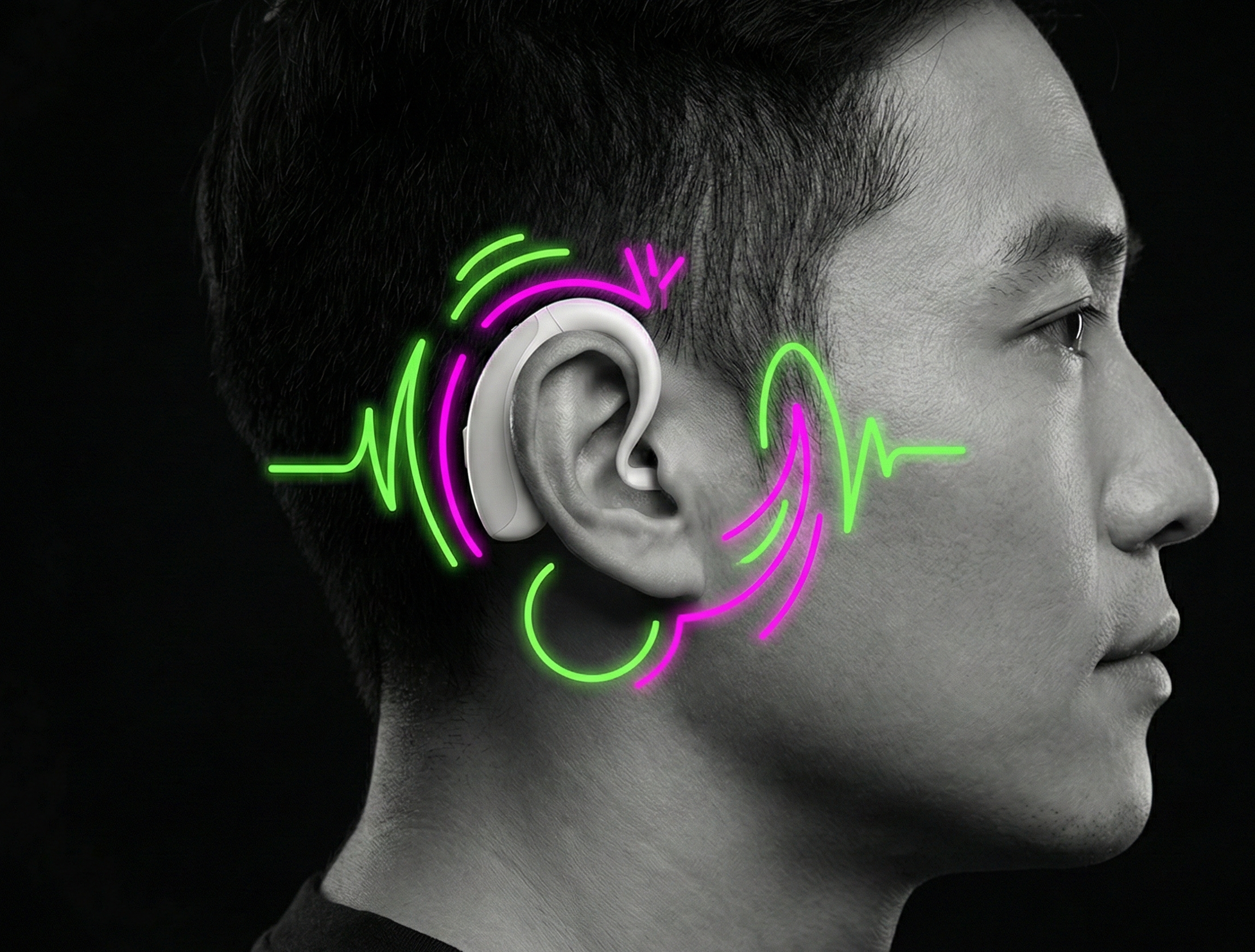
Exploration of spatial audio and the functional aesthetics of ferns. From biological instincts to high-end editing wearable devices.
Precision Acoustics
Designed to absorb environmental noise while isolating key frequencies. The housing acts as an acoustic absorber, dispersing wind noise using microscopic curled curves before it reaches the microphone array.
COMPOSE
Root-stem-leaf system
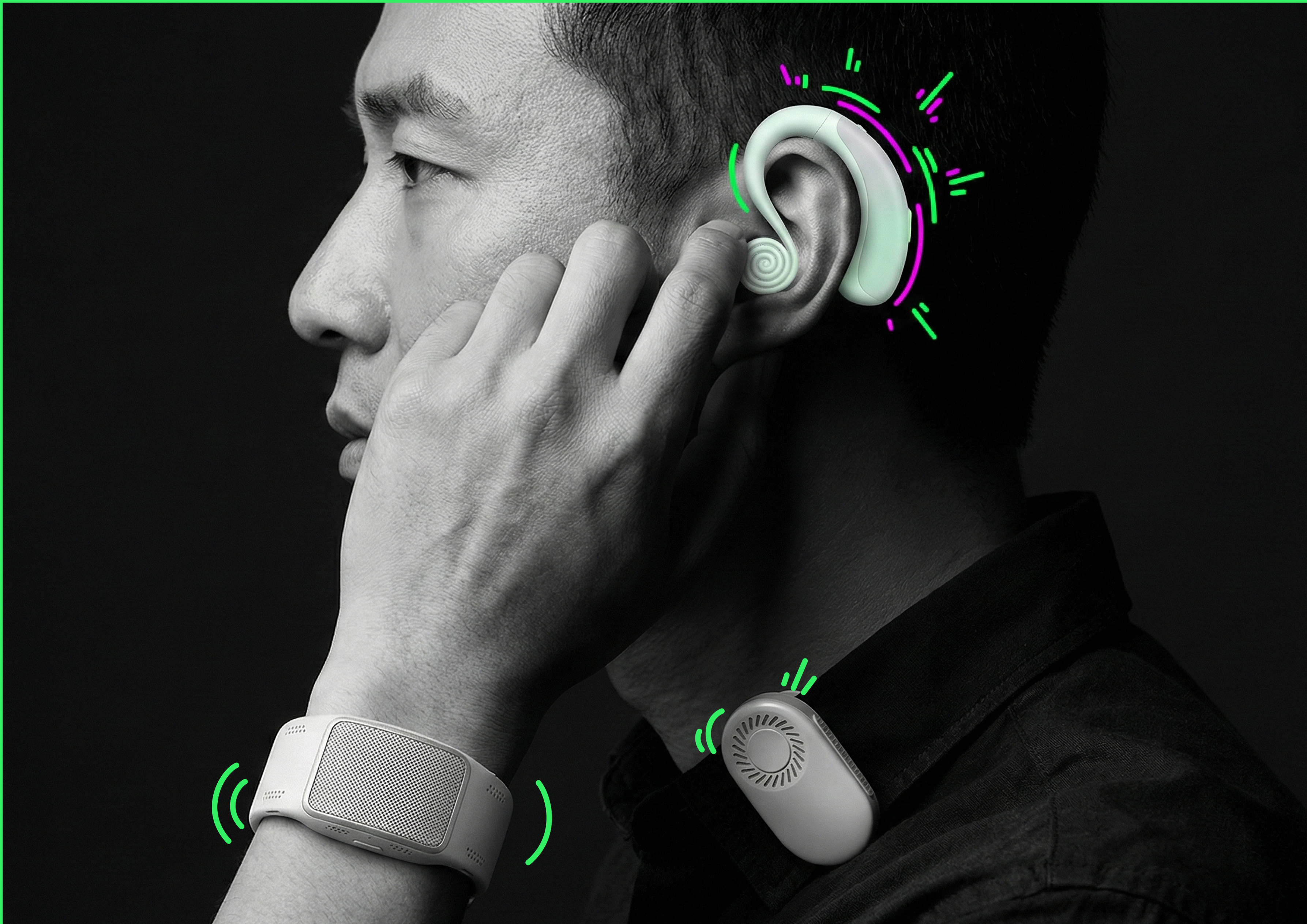
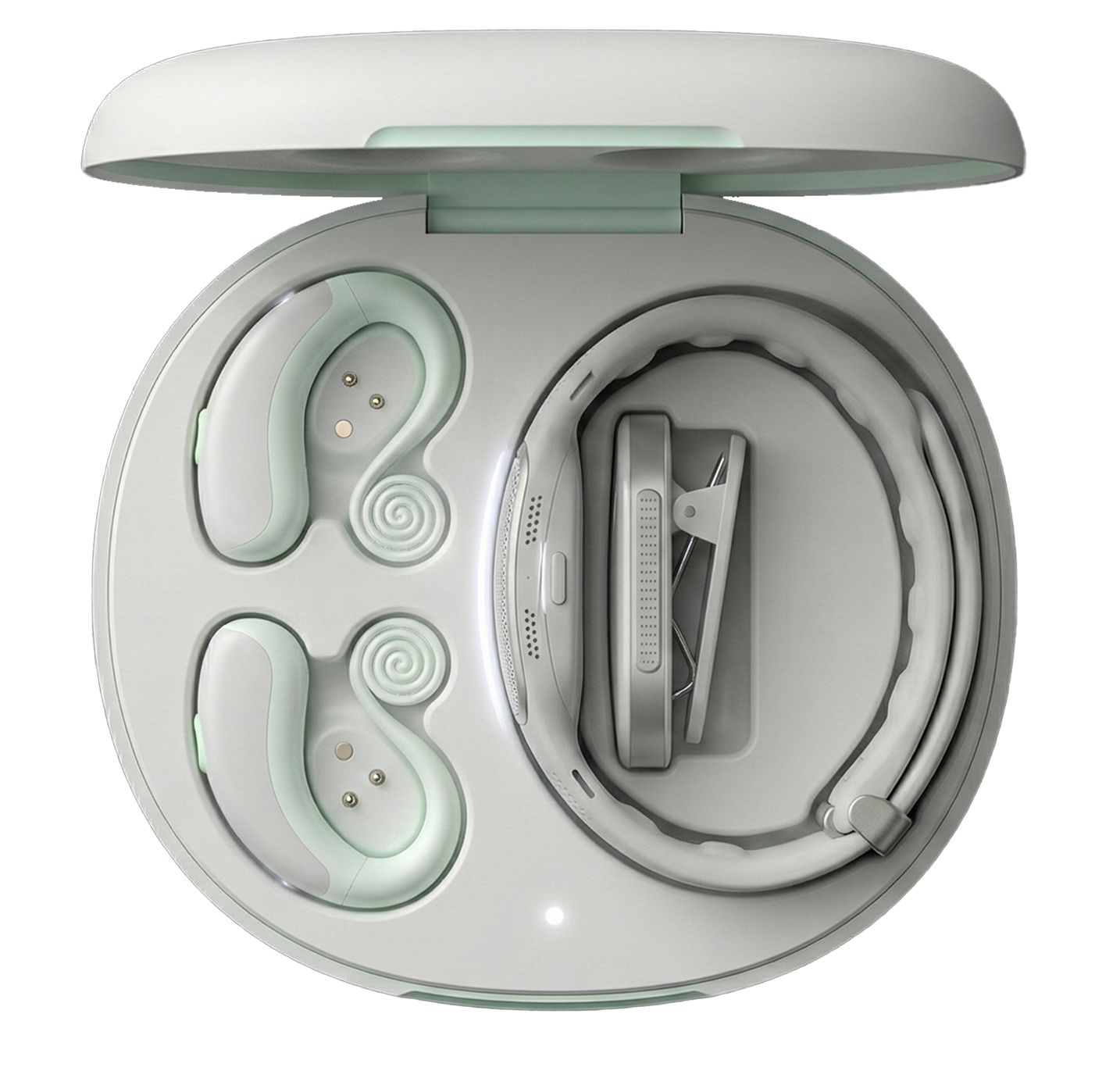
Three independent modules operate in perfect synchronization. Interact with each component to reinforce acoustic transfer.
Ear Module
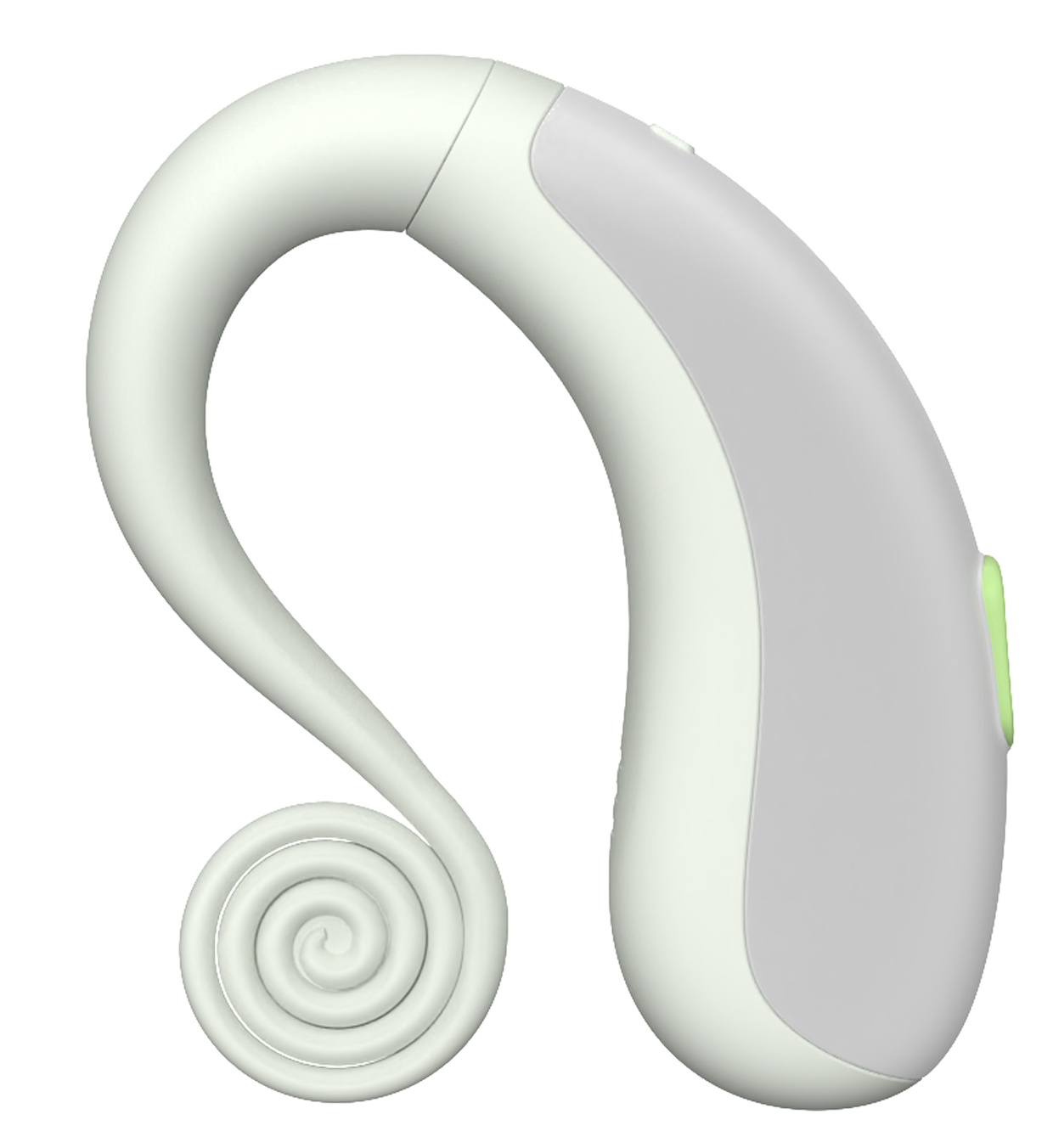
The behind-the-ear hearing aid is responsible for core sound pickup processing and sound output, forming a stable foundation for daily listening.
Receiver module
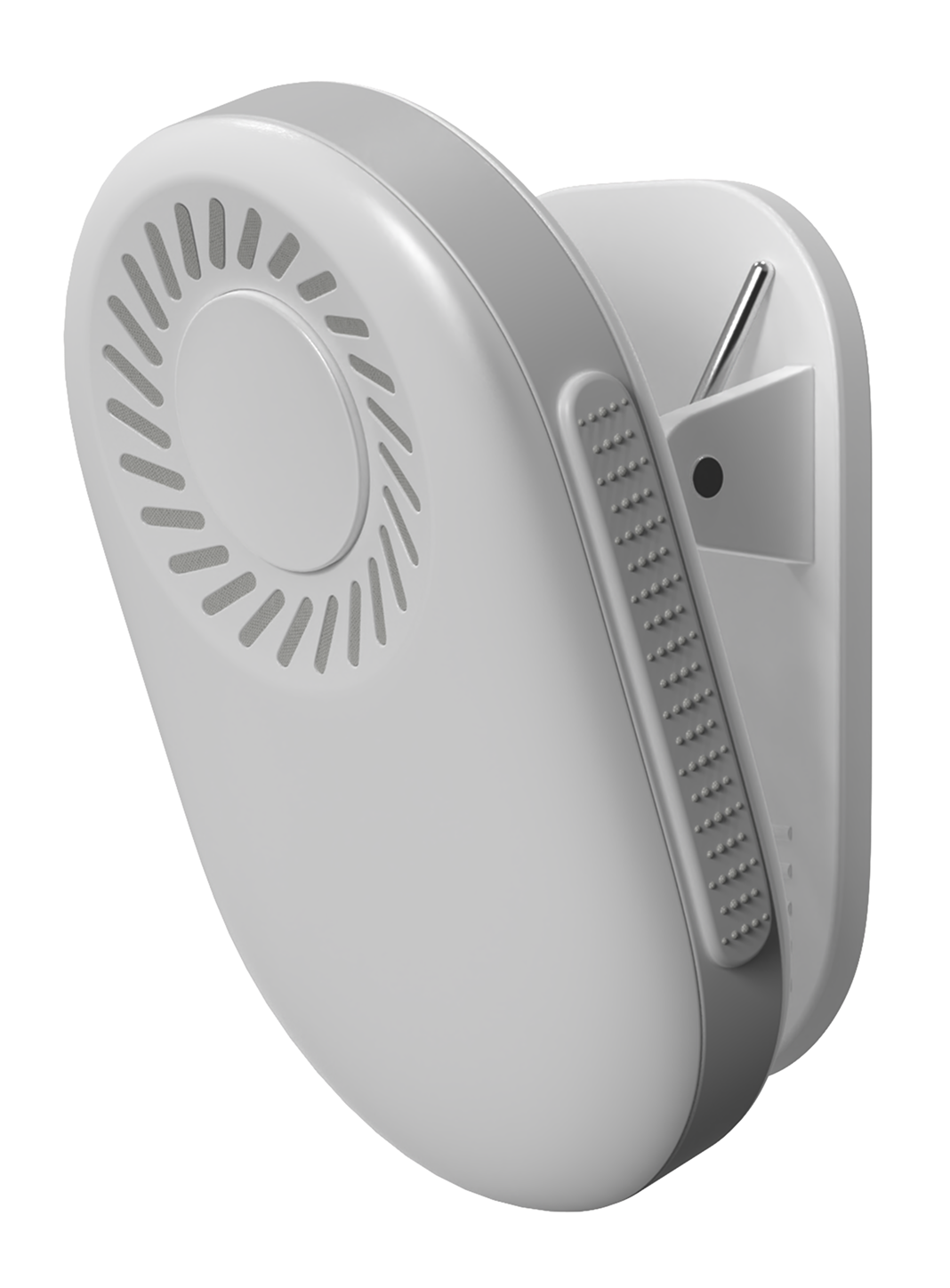
The lapel microphone device, as a 'root node,' is placed close to the sound source for near-field collection, significantly improving voice clarity and reducing environmental interference in settings such as classrooms and meetings.
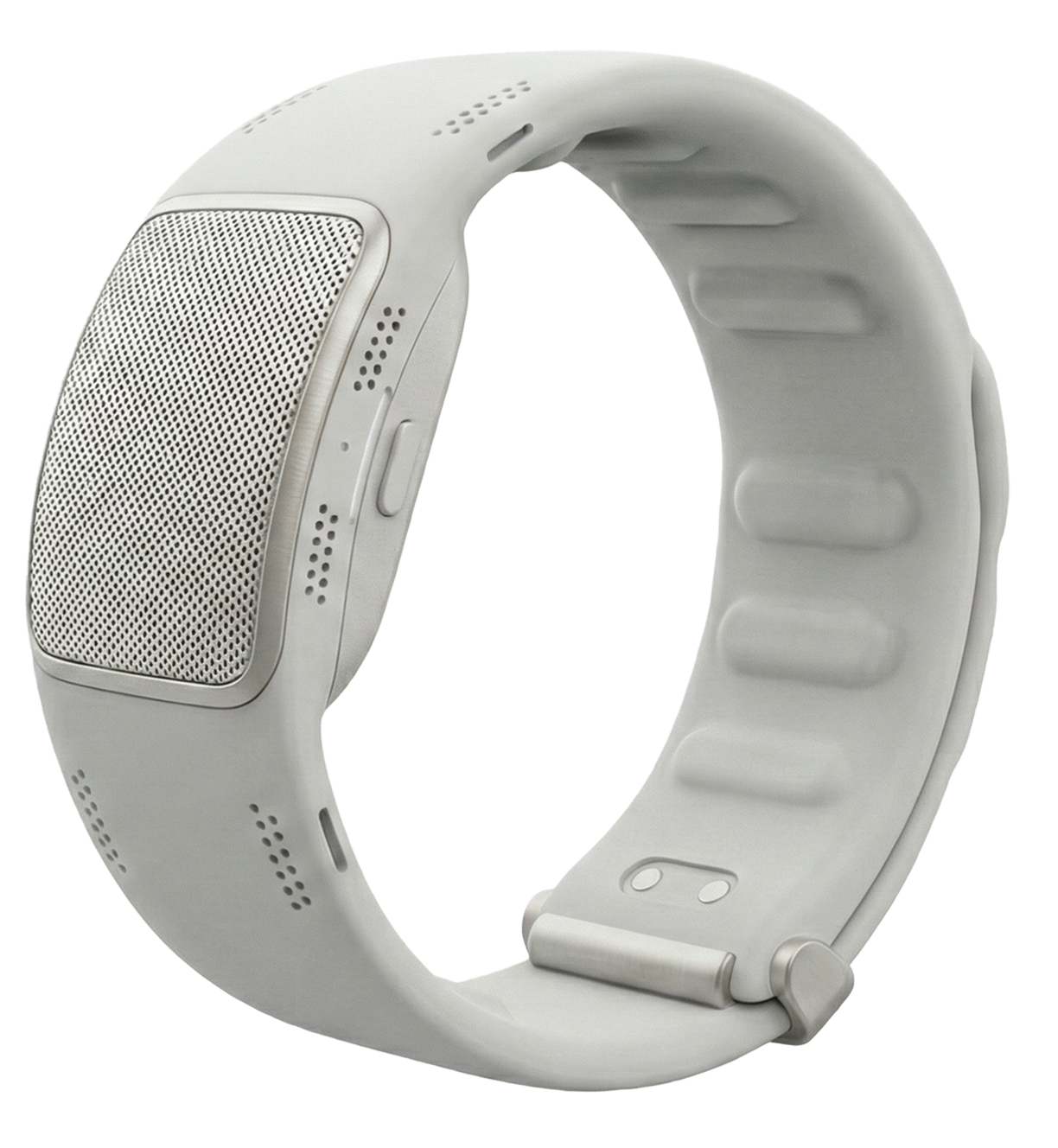
Wristband module
The wristband module handles low-disturbance vibration alerts and quick controls, enabling mode switching, call/alert feedback, and other information synchronization.
Biomimetic origin
The Exploration of Ferns
Implement the fern-inspired bionic mechanism into an executable technical application framework, establishing a closed loop from goal to implementation around four modules: 'active switching, audio pick-up noise reduction, hydrophobic protection, and multi-end collection.' Enable rapid mode switching in noisy environments through event triggers, enhance speech clarity and suppress interference by coordinating multiple ear microphones with collar clip near-field microphones, improve sweat and water resistance as well as self-cleaning ability through hydrophobic microstructures and aperture protection, and enhance the reliability of audio capture and feedback alerts through a distributed system involving collar clip, ear-end, and wristband.
Organic Blueprint
Generative design optimized for ergonomics.

Iteration 1.0
Technical Specifications
Parameter
Processing Core
H1 Bionic Chip
Custom silicon designed for real-time acoustic spatial mapping. Capable of processing 12,000 distinct frequency bands simultaneously with zero perceivable latency.Using the cavitation ejection mechanism of sporangia, it normally maintains a low-power 'breathing' state. When sudden noise is detected, an algorithm instantaneously outputs a peak reverse sound wave within 0.2 seconds, then smoothly decays to avoid ear pressure discomfort.
Power
48h continuous active listening.
Transducers
Dual balanced armature.
Connectivity
BLE 5.3 + Ultra Wideband.
Durability
Exploring the hydrophobicity of ferns in biomimetics